
What is custom software development?
Custom software development is the design and build of an application shaped around one organisation’s specific process, instead of configured from a product built to serve everyone. You own the source code, the data model and the roadmap, so the software changes when your business changes rather than when a vendor decides.
The case for it is usually not ambition — it is friction. A team is running its core process across three tools and a spreadsheet, paying per seat for features it does not use, and losing hours a week to re-keying the same data. At that point the licence fees and the manual work together cost more than the build would.
The case against it is real too. If a mature product already covers 90% of what you need, buying it is the correct answer and we will say so. Custom is worth it when the remaining 10% is the part your business competes on.
— What we build —
Three kinds of custom build.
Most engagements are one of these. If yours is not, the scoping call will say so honestly rather than reshape it to fit.
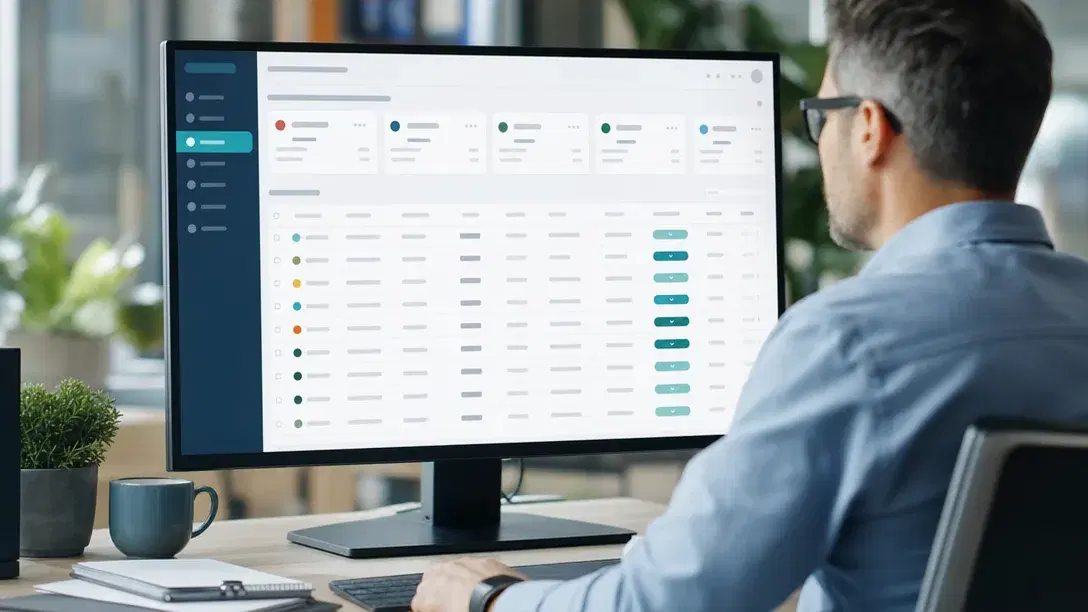
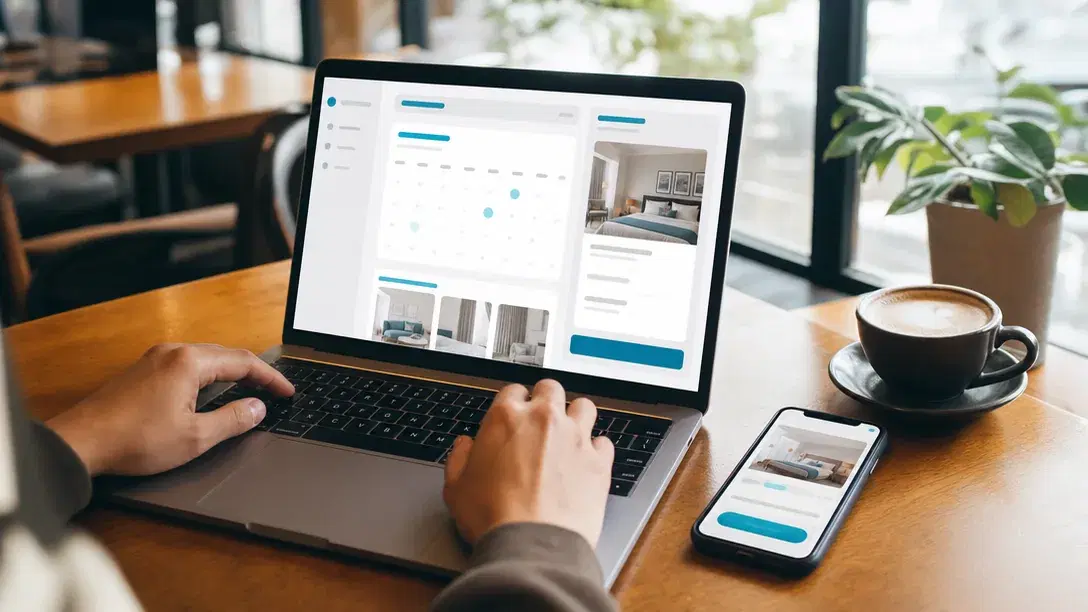


Every build ships to a real environment with tests, monitoring and a rollback path.
— What you get —
What is in every engagement.
The same four things, whatever the size of the build. None of them are line items you negotiate away.
01
Discovery and written scope
We map the process before we design anything, then put the scope in writing with the price on it. If discovery shows the build is smaller than you expected, the number goes down.
02
Architecture and data model
The schema is the decision you cannot cheaply undo later, so it gets designed deliberately rather than grown by accident. You see it and sign off before the build starts.
03
Build, tests and review
Working software at the end of every sprint, in an environment you can log into. Automated tests on the paths that would cost you money if they broke.
04
Handover you can act on
Source code, infrastructure, documentation and a walkthrough with whoever maintains it next — including your own engineers, or another firm. No lock-in by obscurity.
— How we work —
From first call to handover.
Five stages. You get something you can look at and argue with at the end of each one.
01 · Discover
Understand the process
1 week
We sit with the people who do the work today and map what actually happens, not what the org chart says happens.
02 · Scope
Written proposal
3–5 days
Scope, architecture, milestones and a fixed price, in a document you can take to whoever signs.
03 · Build
Sprints you can see
4–12 weeks
Two-week cycles with a working environment at the end of each. Changes get priced against the scope, not absorbed silently.
04 · Ship
Production release
~1 week
Deployment, data migration, monitoring and a rollback plan, plus training for the people who will use it daily.
05 · Hand over
Code and documentation
Ongoing, optional
Repository, infrastructure and docs transfer to you. Support afterwards is a choice, not a dependency we engineered in.
— Honest qualification —
Who this is for.
We would rather lose the enquiry here than three weeks into a build that was never going to work.
A good fit
- Your core process runs across several tools and a spreadsheet, and the gaps between them cost real hours
- You have evaluated the off-the-shelf options and the fit is genuinely poor
- Someone on your side can make decisions and answer questions within a day or two
- You want to own the code, not rent access to it
Not a fit
- A mature product already covers most of what you need — buy it, we will help you choose
- You need a team to sit inside your org chart long-term; that is staff augmentation, not a build
- The requirements will not be stable enough to price, and nobody is available to decide
- The budget assumes the cheapest bid on a marketplace wins
Not sure whether to build or buy?
Tell us the process and the tools you are stitching together now. If buying is the better answer we will say so on the call, at no cost — that conversation ends more of our enquiries than it starts.
Real questions
Common Questions
The questions we get asked most, answered directly.
How much does custom software development cost in India?+
It depends almost entirely on scope, not on headcount or hours. We price per project, not per developer-day, and the number is agreed in writing before any work starts. What moves it: how many distinct user roles the system has, how many external systems it integrates with, and whether it handles payments or regulated data. A single-workflow internal tool is the smallest engagement we take; a multi-role platform with integrations sits several times higher. We will scope it on a call and send a figure you can budget against.
How long does a custom software project take?+
A focused internal tool is usually 4 to 6 weeks from signed scope to production. A customer-facing platform with payments, multiple roles and integrations is more often 10 to 16 weeks. Discovery adds a week before either. The honest variable is your side: projects slip when nobody is available to answer questions or approve a decision, far more often than because engineering ran long.
Do we own the source code?+
Yes, entirely, and it is written into the contract rather than offered as a favour. At handover you receive the repository, the infrastructure configuration, the documentation and a walkthrough session. You can take the system to your own engineers or another firm the day after we finish. We do not host anything you cannot move, and we do not keep a key part of the stack in an account you do not control.
Should we build custom software or buy an off-the-shelf product?+
Buy, if a mature product covers most of what you need. The licence is cheaper than a build, the product is already tested by thousands of other users, and someone else maintains it. Build when the part that does not fit is the part your business competes on, when per-seat costs have outgrown a one-time build, or when the manual work between tools has become a job in itself. We give this answer on scoping calls and it frequently ends the conversation. That is the intended outcome.
Can you work with our existing developers?+
Most of our builds involve a client team that already has engineers. We scope alongside them, agree who owns which boundary, and hand over progressively rather than in one lump at the end. If your team has the capacity but not the specific experience — a first payments integration, a first mobile release, a first production AI feature — that is usually the most efficient shape the engagement can take.
What happens after launch?+
Support is optional and priced separately, because it should be a decision rather than something you inherit. Some clients take a monthly retainer for changes and monitoring; others take the handover, brief their own team and never call again. Both are fine. What you should not accept from any vendor is a system you cannot maintain without them, which is why documentation and a walkthrough are part of the build rather than an upsell.
— Ready when you are —
Tell us what is not working.
Describe the process and the tools around it. You will get a straight read on whether a custom build is the right call — including when it is not.