
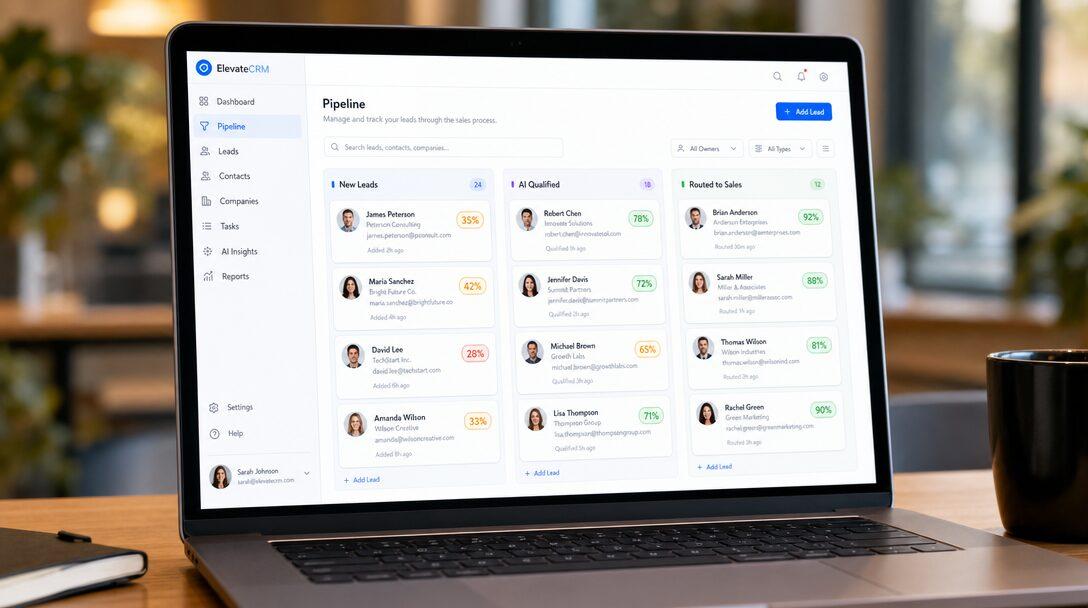
A lead fills out your form at 9pm on a Friday. By the time a rep sees it Monday morning, they've already bought from the competitor who replied in four minutes. That's not a sales-skill problem. It's a speed problem, and it's the exact thing AI lead qualification automation is built to fix.
TL;DR
- AI lead qualification automation reads each inbound lead, scores it against your criteria, enriches it, and either books the meeting or routes it to nurture, in seconds, around the clock.
- Speed is the whole game. The odds of qualifying a lead drop roughly tenfold once the first hour passes, and the first responder wins most of the time. Automation is how you respond in seconds instead of hours.
- It pays back two ways: reps stop wasting time on leads that were never going to buy, and ready buyers stop going cold in a queue.
- Buy it (HubSpot, Salesforce, Apollo, Clay) when qualification is simple and demographic. Build it when the decision needs to read unstructured messages or apply criteria those tools can't express.
- A focused custom build usually ships in a few weeks, not a multi-month consulting program.
What AI lead qualification automation actually does
Strip the jargon and it's one job: decide whether an incoming lead is worth a human's time, then act on that decision instantly.
A person doing this reads the inbound message, checks the company against your ideal-customer profile, looks them up in the CRM, judges whether the intent is real, and either books a call or files it for later. That's maybe five minutes of work per lead, done well. Multiply it by every form fill, demo request, and inbound email, and a chunk of someone's week disappears into triage.
The automation does the same sequence in seconds:
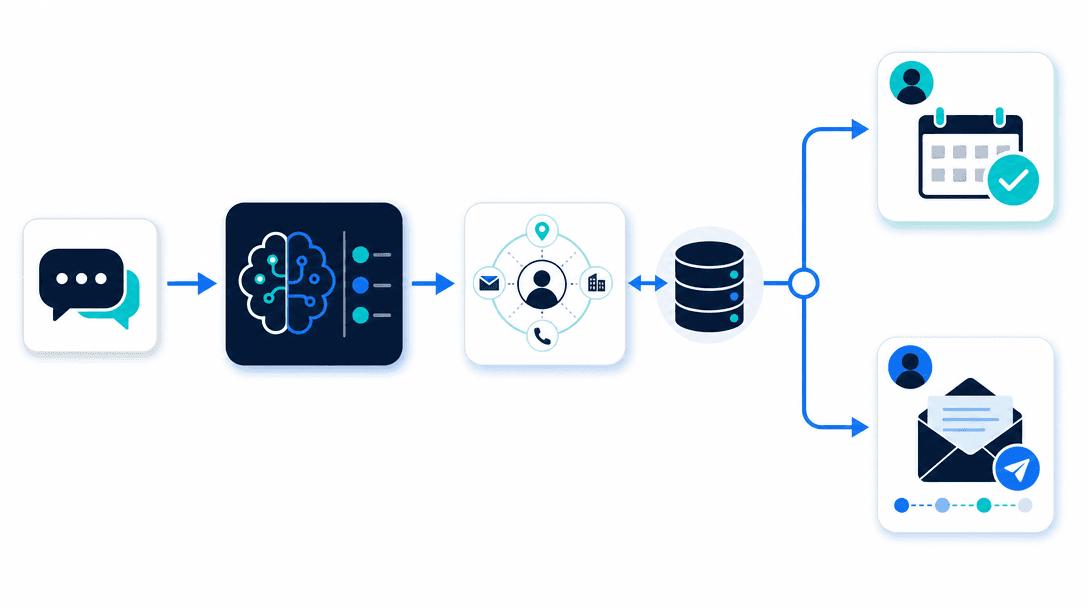
The part that makes it AI rather than a basic automation is the judgment in the middle. Reading a free-text message and working out what the person wants, scoring intent against criteria you'd struggle to write as a fixed rule, deciding what counts as an exception worth escalating. A form-to-CRM connector can't do that. This can.
How businesses actually use it
There's no single setup, but most fall into a few patterns.
Speed-to-lead on inbound. The most common one. A form or chat message arrives, the system qualifies it and replies within seconds, and books a meeting straight onto a rep's calendar if it's a fit. The rep wakes up to booked calls, not a backlog.
Triage before a human touches it. High-volume teams use it to filter. Unqualified leads go to nurture automatically, the good ones get flagged and routed to the right rep with the context already attached, so the first human conversation starts warm.
Enrichment and routing. Even when a human still does the qualifying call, the AI does the grunt work first: pulls the company data, checks the CRM for prior contact, scores the fit, and assigns the lead to the right owner by territory or product line.
Re-qualifying old leads. The quiet win. Most CRMs are full of leads that were "not ready" a year ago. An automation can work back through them, re-check fit against current criteria, and surface the ones worth another look.
The thread through all of these: the boring, repetitive judgment that eats rep time, handled the same way every time, without the queue.
Why speed is the entire point
The case for automating this rests on one well-documented fact: leads go stale fast.
The often-cited Lead Response Management study found the odds of qualifying a lead drop by around 10x once the first hour passes, and that contacting a lead within five minutes versus thirty makes you many times more likely to connect. Other studies put roughly half of all sales going to whoever responds first. You don't need the exact numbers to feel it. You've been the buyer who went with the company that answered first.
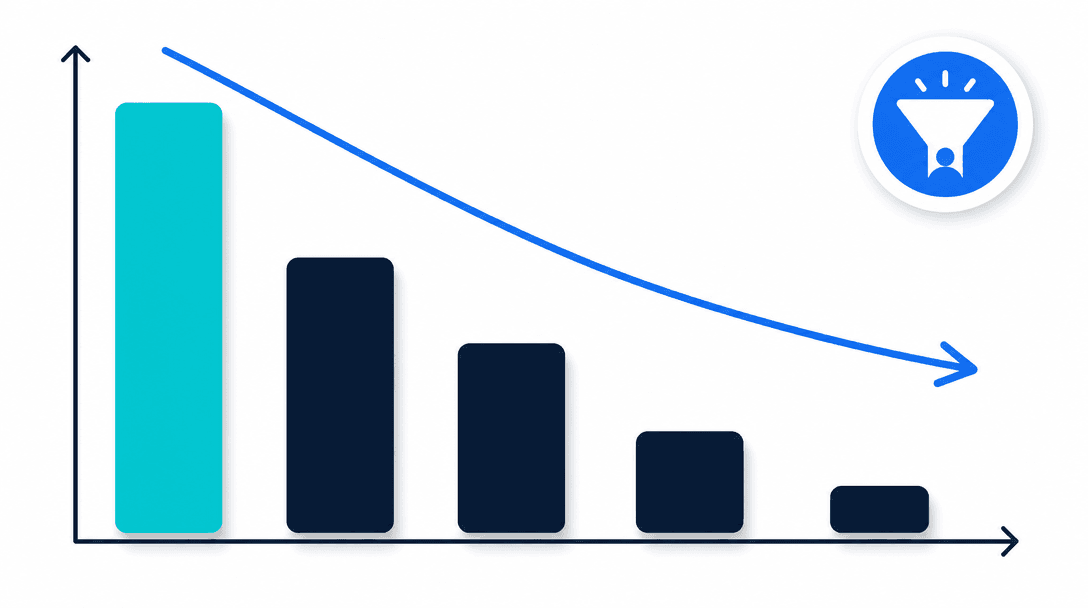
A human team can't win this with effort. Nobody is at the form at 9pm Friday, and even in business hours a rep is on a call, at lunch, or working a different lead when the next one lands. Automation is the only way to get response time down to seconds reliably. That's the real return: not "AI is cool," but deals you were losing to slow follow-up that you now keep.
Build vs buy: when to do which
You don't always need a custom build, and the honest answer matters here.
Buy it when your qualification is mostly demographic and rule-based. HubSpot and Salesforce have solid lead scoring built in. Tools like Apollo and Clay do enrichment and predictive scoring well. If a lead is qualified by company size, industry, and a couple of form fields, those tools already do it, and you should use them rather than pay to rebuild them.
Build it when the decision needs more than a rule can hold. If qualifying a lead means reading an unstructured message and understanding what they're asking for, applying criteria specific to how your business sells, or pulling several systems into a single decision and then acting on it, off-the-shelf scoring starts to creak. That's where a custom AI layer earns its cost.
In practice the best setup is often not either-or. It's a custom qualification layer sitting on top of the CRM you already run, using its data, writing back to it, and handling only the judgment the native tools can't. You keep your stack; you add the brain.
If you're weighing this trade more broadly, build vs buy AI walks through the full decision, and lead qualification is one piece of the wider AI workflow automation picture for SMBs and SaaS teams, alongside document processing automation and automated reporting.
What it costs
Across the market, a single, well-scoped lead qualification automation typically costs $15,000-$40,000 to build. The range moves with two things: how many systems it has to touch (CRM, email, calendar, enrichment provider, Slack) and how much judgment the scoring has to handle. A simple "read the form, score, book the meeting" build sits at the low end. One that reads messy inbound email, applies nuanced criteria, and re-qualifies an existing database lands higher.
That's the build cost. Weigh it against what slow qualification costs you now: the rep hours spent triaging leads that never buy, and the deals that quietly die over a weekend. For most teams doing real inbound volume, the math isn't close.
For the wider context on what AI builds cost in 2026, the AI development cost guide breaks the ranges down, and if you'd rather not pay for ongoing advice, a 20-minute scoping call tells you whether lead qualification is even your highest-return workflow before you spend a dollar building it.
How a sprint delivers it
The reason this works as a fixed-scope sprint rather than an open-ended consulting engagement is that the scope is narrow. One workflow. A defined set of qualification criteria. A known set of systems to connect. A success measure you can name on day one: response time under X, qualified leads routed correctly, a rep's triage hours cut.
So the shape is simple. You agree the criteria and the measure up front. The build runs against it. It's live on real leads in a few weeks, and you judge it on whether response time dropped and the right leads reached the right reps, not on a deck. That's the difference between a sprint and a program: you're buying a working automation with a defined finish line, not a retainer that bills while it figures out what to do.
If your inbound qualification is the workflow eating the most time, that's a clean first build. AI agent development covers how we build the agent that runs it.
The bottom line
AI lead qualification automation reads, scores, enriches, and routes every inbound lead in seconds, so ready buyers don't go cold and reps don't burn their week on leads that were never going to buy. Speed is the whole return: respond in minutes and you're in the deal, respond in hours and you're usually too late. Buy native scoring when qualification is simple, build a custom layer when the decision needs real judgment, and scope it tightly, with a measure you agree up front. If you're handling real inbound volume, the build pays for itself in recovered deals and saved rep hours.
Next step: See where lead qualification fits in the bigger picture of AI workflow automation for SMBs and SaaS, or book a 20-minute call and we'll tell you exactly which workflow to automate first.
What is AI lead qualification automation?+
AI lead qualification automation is software that reads each inbound lead, scores it against your ideal-customer criteria, enriches it with data from your CRM and the web, then routes the good ones to a rep or books the meeting directly. The AI handles the judgment a fixed rule can't: reading an unstructured message, working out intent, and deciding whether a lead is worth a human's time. It runs in seconds, around the clock, so no lead sits in a queue overnight.
How do businesses use AI to qualify leads?+
The common pattern is speed-to-lead plus triage. When a form, email, or chat message comes in, the system reads it, checks it against your qualification criteria (company size, budget signals, use case, geography), enriches the record, and either replies and books a meeting if it's a fit or routes it to nurture if it isn't. Sales teams use it so reps stop spending half their week chasing leads that were never going to buy, and so the leads that are ready never go cold waiting for a callback.
Is AI lead qualification better than HubSpot or Apollo scoring?+
It depends on how much judgment the qualification needs. HubSpot, Salesforce, and tools like Apollo or Clay do rules-based and predictive scoring well, and if your qualification is mostly demographic and fits their model, use them. A custom AI build wins when qualification hinges on reading unstructured messages, applying criteria those tools can't express, or stitching several systems into one decision and action. Often the right answer is a custom layer on top of the CRM you already run, not a replacement for it.
How much does AI lead qualification automation cost?+
Across the market, a single, well-scoped lead qualification automation typically costs $15,000-$40,000 to build, depending on how many systems it touches (CRM, email, calendar, enrichment) and how much judgment the scoring needs. Native CRM scoring or a point tool can be far cheaper if your qualification is simple. The way to decide is to weigh the build against the rep hours it saves and the deals that currently die from slow follow-up.
How long does it take to build a lead qualification automation?+
A focused build usually ships in a few weeks rather than months, because the scope is narrow: one workflow, a defined set of qualification criteria, and the systems it connects. A fixed-scope sprint works well here. You agree the criteria and the success measure up front, build against it, and have it running on real leads before a typical consulting engagement would have finished its discovery phase.
Free PDF
The 2026 AI Development Rate Sheet
Build, agent, RAG and consulting rates by tier, in one PDF, so you can check a quote before you sign it.

Written by
Pankaj Kumar
Founder · Metageeks Technologies
Metageeks builds software and AI products for growing businesses. Every build is scoped in writing before it starts, and you see progress every week. We write about what holds up once it reaches production.
Connect on LinkedInThe AI Build Brief
Ship AI that holds up in production.
Practical playbooks on how to build, price and ship AI features, in one short email every other week.